
President Yoweri Museveni has reaffirmed the government’s commitment to humanely resettle hundreds of households affected by the devastating mudslides that recently struck parts of Kapchorwa, Keen and Bukwo districts in the Sebei Sub-region. Speaking during a meeting with local leaders from Kapchorwa, Kween, and Bukwo at State Lodge in Mayuge on Wednesday, November 19, 2025, the President emphasized that saving lives and protecting the fragile Mount Elgon ecosystem will guide every decision going forward.
The meeting followed one of the worst mudslide disasters in the region’s history, occurring earlier this month and leaving widespread destruction across multiple sub-counties that lie along the slopes of Mount Elgon National Park. Local leaders used the gathering to highlight the scale of devastation, challenges facing displaced families, and long-standing historical grievances tied to land access, conservation boundaries, and population pressure.
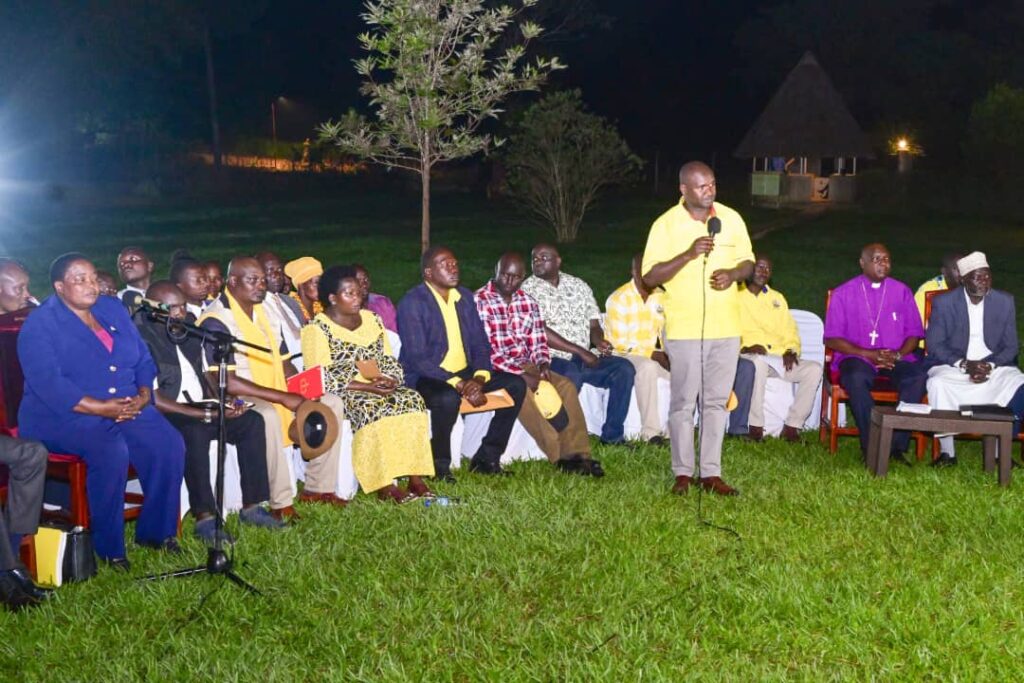
Reports presented to the President revealed 20 people lost their lives in the mudslides, with 19 bodies recovered and buried, while one person remains missing. Over 35 households were destroyed, and more than 600 are currently considered at high risk of further landslides.

MUSEVENI ASSURES SEBEI LEADERS OF SWIFT, DIGNIFIED RESETTLEMENT FOR LANDSLIDE VICTIMS
Mr. Kitti Peter, the NRM flagbearer for T’oo County in Bukwo District, who briefed the President on the situation, said the impact has been emotionally and economically overwhelming.
“We lost 20 lives. We had 35 households destroyed. We have over 600 households at risk,” Kitti reported, stressing that the affected Sabiny families are pastoral and agricultural communities whose livelihoods have been profoundly disrupted.
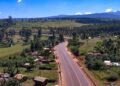
The disaster struck hardest in Chesower, Tulel, Kamet, Lwongo, Mutuishet, and Kortek sub-counties – communities perched on steep slopes bordering Mount Elgon National Park. According to local authorities, years of deforestation and limited tree cover have weakened soil stability, making the area highly vulnerable to mudslides whenever heavy rains fall.
While acknowledging the urgency of the situation, President Museveni told leaders that relocation must be handled in a non-tribal, scientific, and nationally inclusive manner.
“On the issue of resettlement, I don’t think we can make it very tribal between the Bagisu and Sabiny,” Museveni said.
“What we need is to settle the people from the whole Elgon, where they’re in danger. We are trying to get land, and once we get the land, we shall settle all of them. What we want is to save people,” he added.
The President cautioned leaders against framing the resettlement debate in ethnic terms, asserting that the priority is protecting lives and ensuring that resettlement sites are secure, regardless of their location in Uganda.
Drawing from previous experiences, Museveni cited the successful resettlement of displaced Acholi families during the northern Uganda conflict, who were relocated to Bweyale in Bunyoro, where they have since built a thriving community.
“I asked them: Why are you suffering, yet we have other parts of Uganda that are peaceful? They were surprised,” Museveni said.
“Why don’t you cross over the Nile and go to a place called Bweyale in Bunyoro? Now the Acholi are happily there. Even the LC III Chairperson is an Acholi,” President Museveni told the meeting, commending the Acholi community at Bweyale for building what he termed a “huge town” called Bweyale.
“What we need is to get the land and settle these people. Money is not the problem; where is the land?” Museveni said, urging leaders to prepare their communities for potential relocation outside their traditional territories once land is secured.
“If you go to Kampala, there are many tribes there. I will continue to get more money to buy land where it is available. It may even be outside the area, such as Teso. As long as it is in Uganda, I would want these people to agree and settle there, because there’s no harm,” President Museveni stressed
Prime Minister Robinah Nabbanja informed the President that the government has already released money for purchasing land for resettlement, as per his earlier directive. Compensation has also been rolled out: families who lost relatives received Shs 5 million each, while the injured were given Shs 1 million.
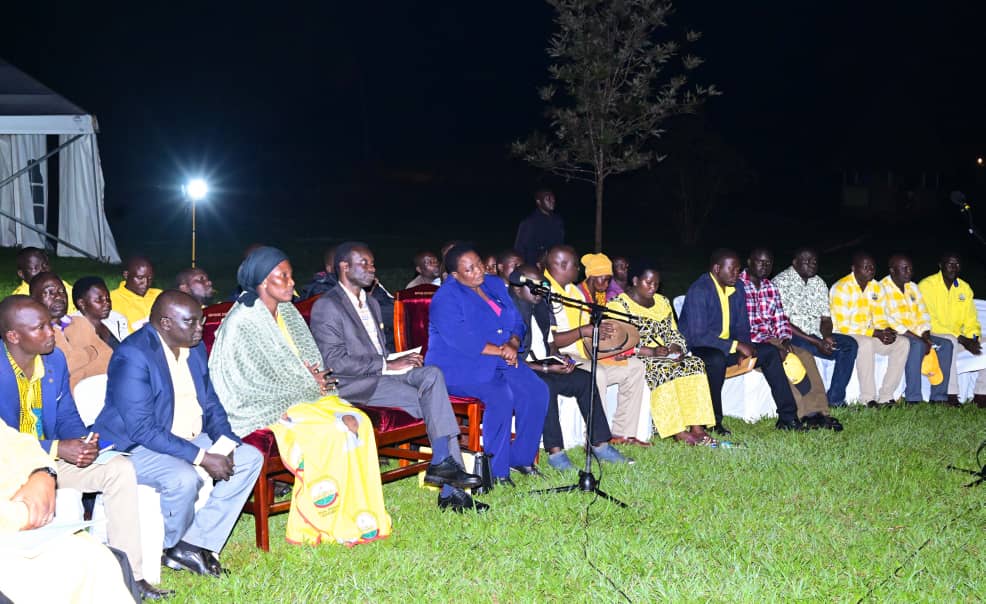
However, despite available funds, Nabbanja said the government has struggled for years to secure suitable land for the permanent relocation of at-risk households in both Bugisu and Sebei.
“Your Excellency, the challenge has been land, not money,” Nabbanja said. “We have the money you gave us to buy land, but the condition of the land has prevented us from moving.”
She added that community leaders have suggested relocating people from the high-risk mountain enclaves down into the lowlands along the Kapchorwa–Bukwo road, where safer grassland is available. In return, the Uganda Wildlife Authority (UWA) would take over the upper slopes where human activity threatens the mountain’s ecological stability.
““When I was discussing with leaders recently, after this problem, they told me that the people, especially, are willing to relocate from those dangerous enclaves, that if UWA can take their river upstream, and then they go down where the land is safer, and then we can exchange,” Nabbanja informed the president.
Museveni welcomed the proposal and said he would engage UWA.
“No problem. That one I agree,” he said. “I will call UWA, because I have not consulted them.”
The President reiterated that conservation is not merely administrative but rooted in the science of environmental protection. Mount Elgon, he said, is a critical water catchment for numerous rivers and cannot sustain human settlement or cultivation beyond certain altitudes.
“There are areas where people should not settle. If you cultivate up to the river sources, they will dry up, and it will be a disaster,” Museveni warned.
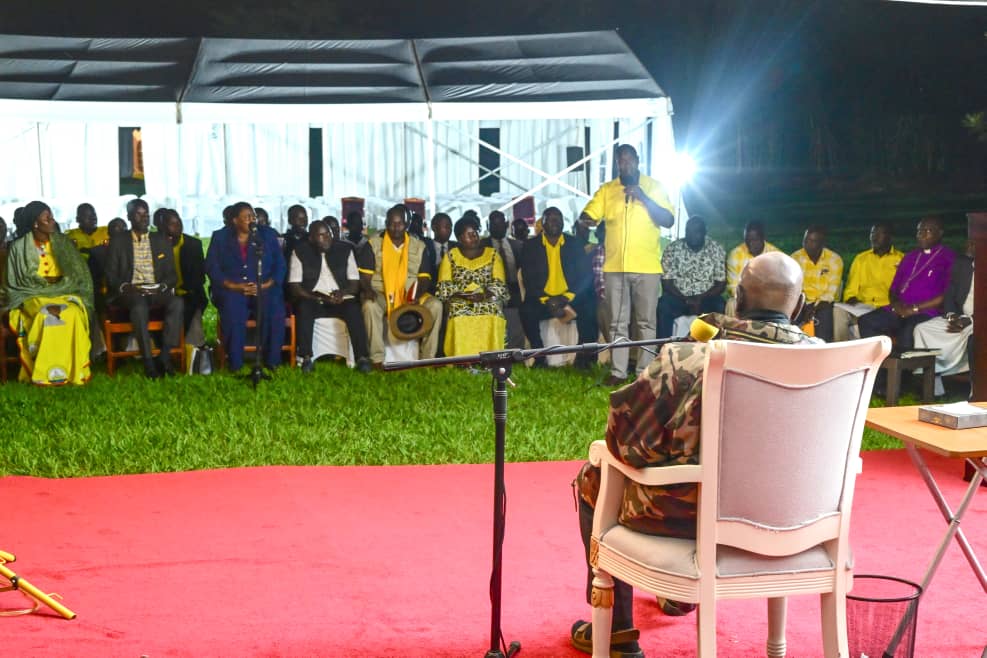
He likened the mountain to human flesh, which remains healthy and resilient when treated carefully, but vulnerable to irreversible damage if over-exploited.
“You can trim your nails, but if you go too deep, you will cut yourself,” he explained. “We must know how far we can go into the mountain without causing a disaster.”
Museveni noted that increased population pressure has destabilized the soil over time, making catastrophic landslides more likely.
Leaders from Bukwo and Kween emphasized that beyond relocation, victims require compensation to rebuild their livelihoods.
“These are people who have lived a moderate but dignified life. They have their animals, milk, and other resources. Putting them in camps has not been easy,” Kitti noted.
He urged the President to expedite compensation and allow livestock farmers to temporarily graze in designated grassland areas near, but not inside, the national park.
For Hon. Chemonges William, the MP for Kween County, the meeting provided an opportunity to revisit the plight of the Ndolobos, a minority community within the Sabiny who historically lived within the Mount Elgon Forest. Chemonges reminded the President of a 2011 directive to resettle the Ndolobos along the Bukwo–Suam road in an area locally known as “London,” where earlier government land purchases had proven insufficient.
The government tried to resettle people within the 2,100 hectares and 6,000 hectares, but it was not enough. Some families remained un-resettled,” he said.
Museveni acknowledged the long-standing issues and said the government would review all resettlement directives to ensure fairness and safety.
According to Rt Hon. Nabbanja, her office has supplied tents, food, and non-food items to displaced families. However, with over 600 households still classified as at risk, leaders emphasized that temporary relief is not a long-term solution. She reaffirmed the government’s commitment to coordinating with the Ministry of Tourism and the Uganda Wildlife Authority to fast-track land identification and resettlement logistics.
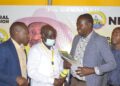
The high-level meeting brought together senior figures from the region and the ruling party, including NRM Vice Chairman for Eastern Uganda, Hon. Calvin Ecodu, Resident District Commissioners, Members of Parliament, NRM flagbearers for the 2026 elections, and religious leaders from Sebei.